
Lower pressure in the distal pulmonary bed means LV unloading
The device is designed to attenuate pressure transmission to the distal pulmonary vasculature during exertion, unloading the left ventricle.
Paired findings from invasive exercise right heart catheterization at baseline and 6 months in the ContraBand™ Safety & Feasibility Study (interim analysis). See the data
Attenuating the rise in PCWP
The UPright™ System is designed to apply controlled banding to the left and right pulmonary arteries, reducing distal PAP and attenuating the rise in PCWP, thereby delaying the onset of symptom-limiting filling pressures during exertion.
The pressure reduction applies to the distal pulmonary circulation, downstream of the implants, reflecting LV unloading. PCWP is an invasive surrogate of LV filling pressure and left atrial pressure (LAP). As the pressure cost of exercise falls, patients can recruit more cardiac output reserve.
PCWP during exercise (mmHg)
Baseline vs 6 months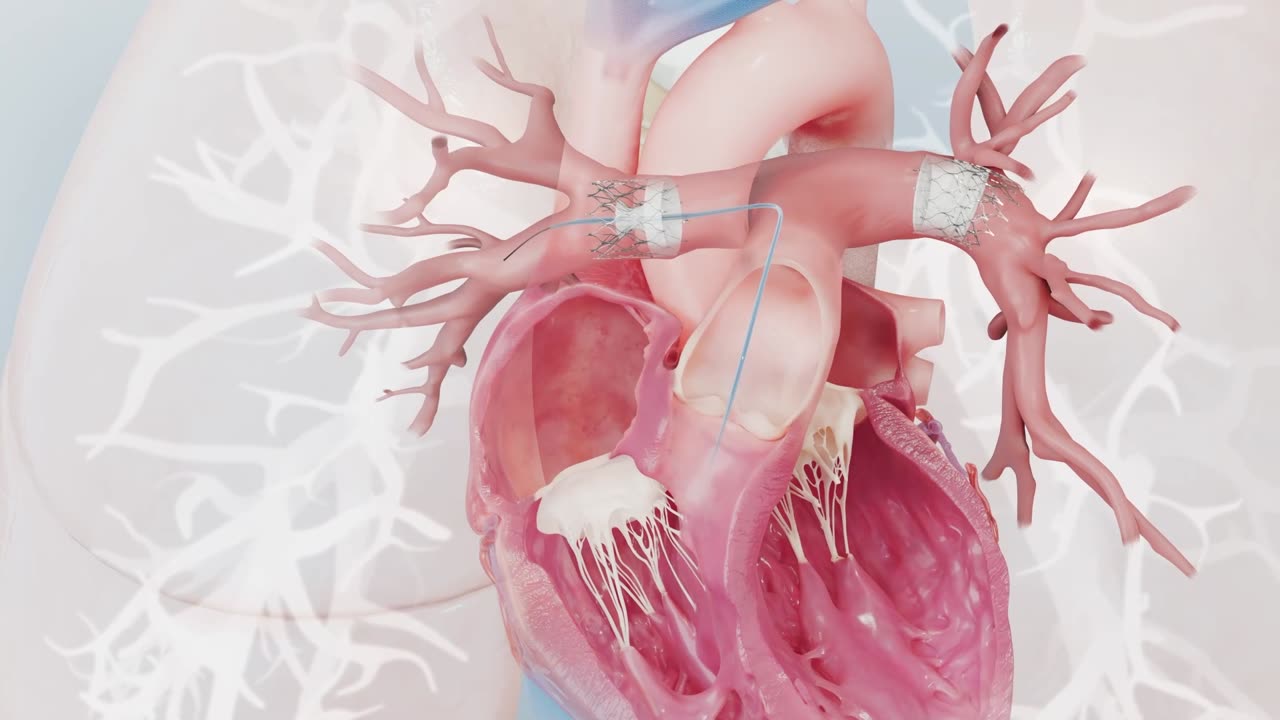
Bilateral, proximal, outside the heart
Devices are placed in the left and right branches of the pulmonary artery using an 18F transvenous delivery system. The pressure gradient can be eliminated later if needed.
Procedure animations